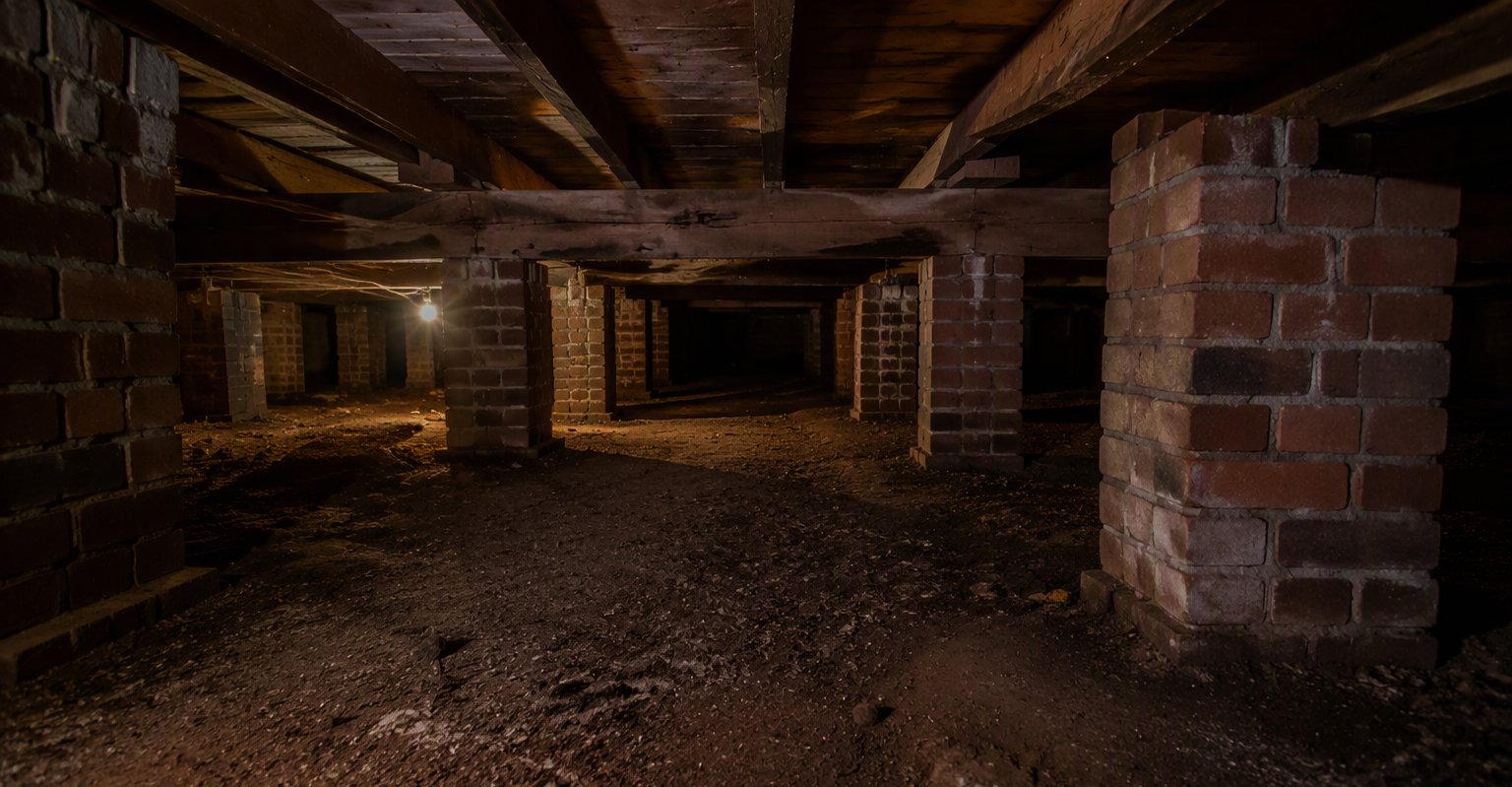
Under half of Savannah there is a dark space nobody visits: brick piers, bare earth, a tangle of ducts and plumbing, and air that hasn’t been dry since March. The crawlspace is where this city’s mold story begins — and most homeowners only meet it through the smell that rises through the floor.
The recipe
Take bare earth — it evaporates moisture continuously, no matter how dry the surface looks. Add humid lowcountry air flowing in through the foundation vents all summer. Cool it against the underside of an air-conditioned floor. What you get is condensation: water forming on joists, ducts, and subfloor, night after night, for nine months. Mold doesn’t need a leak down there. It needs the climate, which is undefeated.
The construction habits that feed it
Savannah’s older housing stock was raised on piers long before vapor barriers were standard — many crawlspaces have none at all, or a remnant of plastic from the nineties covering a third of the dirt. Ventilation was the old gospel: open vents would dry the space. In a humid climate it does the opposite — it imports wet air. Add a slow plumbing drip or a disconnected dryer vent and the recipe is complete.
How it announces itself
The musty smell that greets you at the front door is the classic — houses stack-vent their crawlspace air upward, so the living space breathes what’s below. Cupping hardwood, a spongy floor near an exterior wall, and allergy-type irritation that lifts when you travel all point the same direction. By the time the house complains, the colony is usually established.
What a fix actually looks like
Cleaning the joists without fixing the moisture is mowing weeds. The real job is sequenced: remove the growth, then a proper vapor barrier sealed to the piers and walls, then the moisture corrections — drainage, the drip, the vent strategy. Some crawlspaces earn full encapsulation; most earn an honest barrier and corrected ventilation. The crawlspace page shows how we decide which is which — and the readings come with you in writing.